
LEATSS brings together amateurs and professionals to provide expert tuition in all fields of theatrical production.
LEATSS strives to create the optimal conditions for creative and inspiring work in a friendly and fully supportive environment. The emphasis is on process above product.
LEATSS organises:
and less frequently,
The Course Director is a professional theatre practitioner appointed by LEATSS asbl.
The Director is responsible for selecting the tutors, for ensuring that a balanced programme is offered, and for organising the working day (timetable), all in line with the aims and aspirations of LEATSS and in collaboration with board of directors.
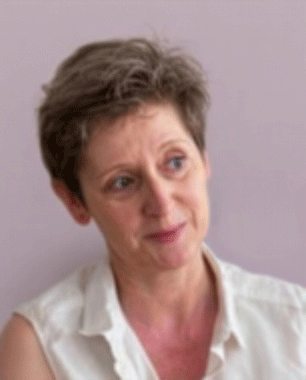
The current Course Director is Janice Dunn, a highly experienced and creative director, deviser, writer and workshop leader.
The tutors are drawn from an expanding pool of active professionals who share commitment and a passion for teaching, who believe in our ideals and are willing to share their knowledge and experience.
Like many students, tutors are glad to return, eager to participate and be as much challenged themselves as they challenge their students. And like the student body, there is generally a mix every year of new tutors and returnees, thus ensuring the course work remains fresh, invigorating.and of a high standard.
Our students come from all over Europe—and even further afield. Many return, some once or twice, and some more regularly. We attract a wide range of ages and people with widely differing skills and experience, but the way our courses are structured enables participants to work together creatively from the start. All we expect is that students be open to learn, and if hesitant, give them the support and encouragement they need. The sympathetic atmosphere means new participants are drawn in effortlessly.
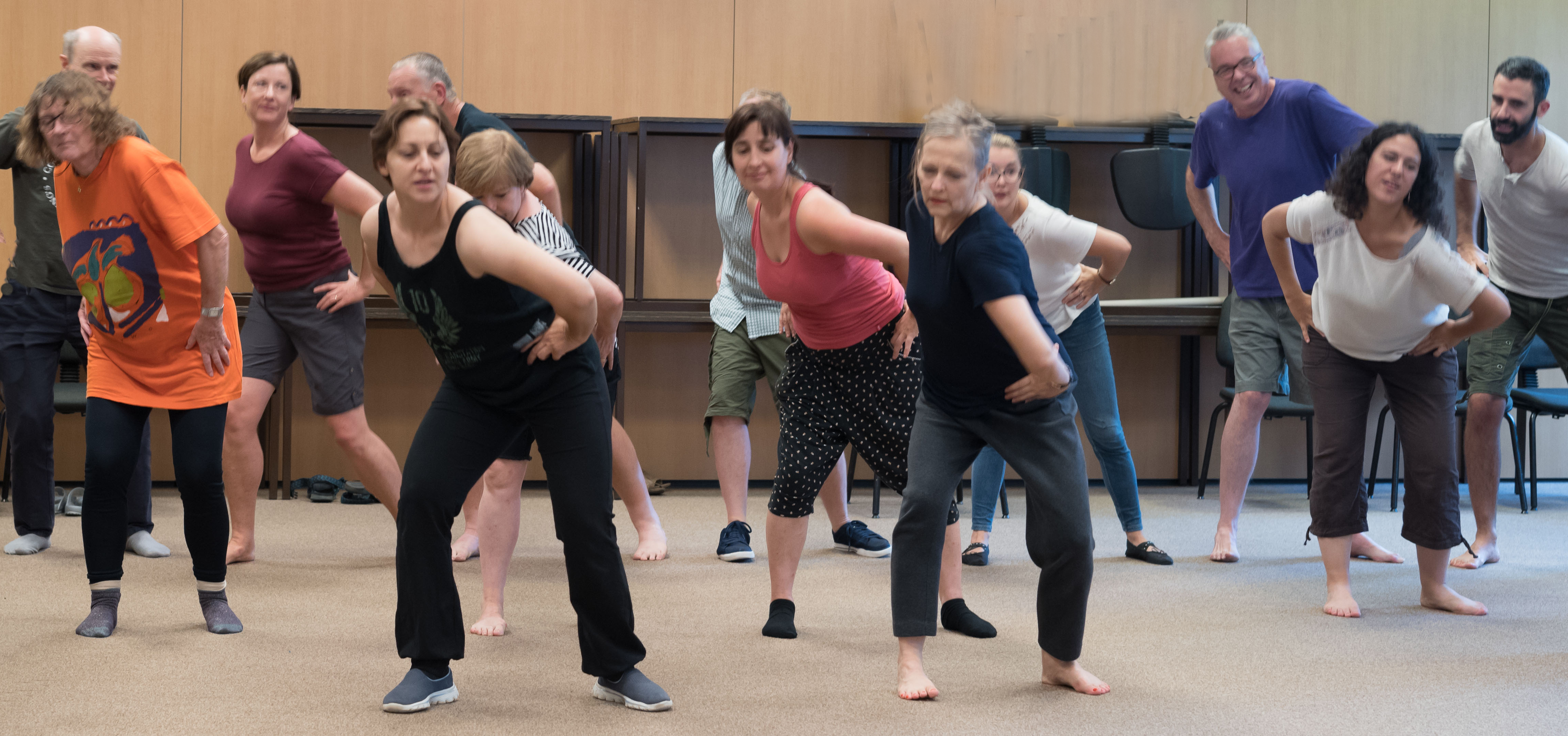
Students are welcome regardless of social, political, religious and cultural background, sexual orientation or gender.
As all courses are given in English, a certain proficiency is required from participants, even though they may come from different languages groups. We strive to ensure that all are integrated and even encourage the use of other languages in class, where this is appropriate.
LEATSS is run by a not for profit organisation registered in Luxembourg that, in conjunction with the Course Director, strives to maintain a high standard of work.
As a direct offshoot of the British Theatre Association's summer school, LEATSS was, from 1989, primarily hosted by the New World Theatre Club of Luxembourg which provided logistical and administrative support.
In February 2017, LEATSS asbl was formed in Luxembourg and assumed full responsibility.
LEATSS traces directly back to the theatre courses launched in 1926 by Margaret Macnamara of the British Drama League and with support from, among others, George Bernard Shaw and G.K. Chesterton. In 1973 the League became the British Theatre Association (BTA) which continued the courses, including a summer school, until 1988. The BTA ceased operations in 1990.
LEATSS traces directly back to the theatre courses launched in 1926 by Margaret Macnamara of the British Drama League and with support from, among others, George Bernard Shaw and G.K. Chesterton. In 1973 the League became the British Theatre Association (BTA) which continued the courses, including a summer school, until 1988. The BTA ceased operations in 1990.
The summer schools had always existed to bring professional and amateur practitioners into close creative contact. Tutors had always come from “the business”, be they actors, directors, drama school teachers, musicians, writers or other specialists; and students had always qualified for attendance on grounds of enthusiasm, without discrimination as to age or experience. A number of such enthusiasts from the European mainland had attended BTA courses in Cheltenham, Lancaster and elsewhere, and so, when the financial situation of the BTA became imperilled, they responded to the call and the last BTA summer school was held in Brussels in 1988.
The school crossed the Channel under the leadership of Anthony Cornish, Deputy Director of the BTA and long-standing Course Director in the UK. He was subsequently invited by the local organiser, Chris Bearne, to remain as Course Director when the first independent school was held at the Chateau de Munsbach in Luxembourg in 1989.
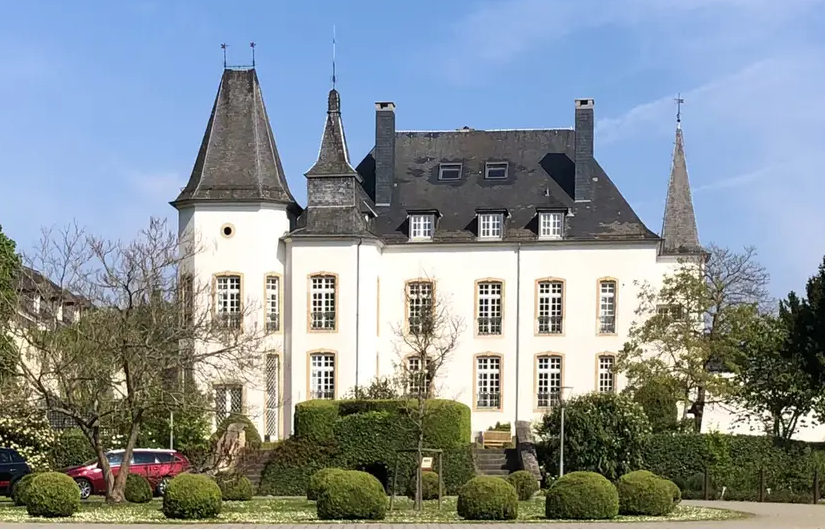
The European mainland had long had a natural platform in the form of a community of English speaking theatre groups who in 1976 invented their own variant of networking in the guise of FEATS, the annual Festival of European Anglophone Theatrical Societies, of which Anthony Cornish was an early Adjudicator. The initial idea was that the summer school would, like FEATS, be organised by different groups in their home cities, but finding suitable venues proved a great difficulty and so, after being run in 1992 by the Anglo American Theatre Group in The Hague, the summer school remained in Luxembourg and became known as "Munsbach". The chateau, however, became too small for our needs and the move was made in 2004 to the Centre d'Accueil at Clairefontaine, just over the border in Belgium.
The summer school continued to be hosted by the New World Theatre Club of Luxembourg until February 2017, when the organising team formed an independent, not for profit, legal entity in Luxembourg called LEATSS a.s.b.l. (association sans but lucratif) run entirely by volunteers.
LEATSS has thrived over the years. When Anthony Cornish stepped down as Course Director in 1996, Mike McCormack, former Senior Lecturer in Drama at John Moores University, Liverpool, took over the leadership. In 2003 the baton passed to Graeme Du Fresne, who first tutored on the Luxembourg Summer School in 1994. Graeme is a former Lecturer and Practitioner in Brechtian Theory and Practice at London Metropolitan University and taught at the Drama Centre and the Italia Conti Academy in London. In 2025, Janice Dunn took over the course directorship.
In 2020 and 2021, the Summer School could not be held in its normal format because of the COVID pandemic. Instead, a virtual, week-long summer school was run via Zoom. This was so successful, that virtual theatre courses have become a regular feature of LEATSS, based on the shorter masterclass-style workshops which had been introduced to run alongside the summer school.